
Virginia Beach is a coastal city located in southeastern Virginia, known for its long sandy beaches, lively boardwalk and mild climate. It is a popular tourist destination that attracts visitors with its picturesque ocean coastline, wide range of outdoor activities and rich history.

The city boasts the Virginia Beach Boardwalk, a 3-mile boardwalk filled with restaurants, shops and entertainment venues. Off the beach, attractions such as the Virginia Aquarium & Marine Science Center and First Landing State Park offer educational and recreational opportunities.

Virginia Beach is also home to a variety of cultural events and festivals throughout the year, making it an exciting place to visit or stay.


Home Solar Panel Cost in Virginia Beach

In Virginia Beach, as of early 2024, the cost of solar panel installations varies based on the size of the system and the provider. Here are some key figures:

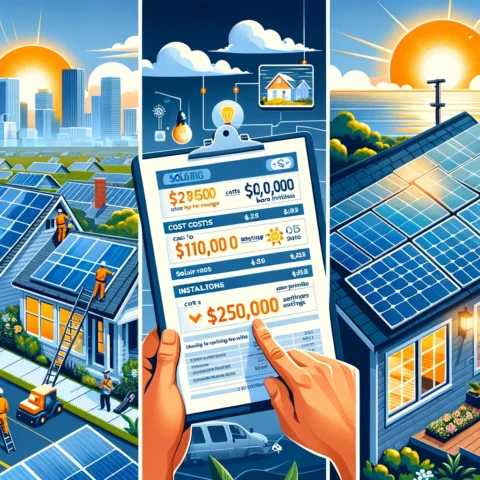
The average cost of a solar panel system is $2.98 per watt, including installation. For a typical 5 kW system, this amounts to about $14,914 before incentives, with prices ranging from $12,677 to $17,151​​.

Another source cites the average cost of solar panels in Virginia Beach at $2.87 per watt, making a typical 6 kW (6000 watt) system cost $12,064 after claiming the 30% federal solar tax credit. This is considered lower than the national average of $3.00 per watt for residential solar power systems​​.

The average price in Virginia Beach has also been reported at $3.1 per watt, which puts the gross price for a 5 kW system at approximately $15,501 before incentives. After the federal tax credit, the average price drops by 30%​​.

These prices include the cost of equipment, labor, and installation but vary depending on the specific details of the installation, such as the system’s size and the chosen solar panel brand. Remember, the final cost to homeowners can be significantly reduced through federal tax credits and potentially other local incentives.


Is it Profitable to Install Solar on Your Home in Virginia Beach

Installing solar panels on your Virginia Beach home can pay off over time, due to several factors:

Energy savings: Solar panels significantly reduce your monthly electricity bills since you will be producing your own energy. The amount of money you save depends on the size of your solar system and your electricity consumption. With Virginia Beach’s average electric rate and solar generation potential, homeowners can see significant savings over the lifetime of their solar system.

Federal Solar Investment Tax Credit (ITC): The federal government offers a tax credit for solar energy systems. According to the latest information available at the beginning of 2024, this is a 30% credit, which can significantly reduce the net cost of your solar installation. This incentive directly reduces the amount of tax you owe, dollar for dollar, making solar power more affordable.

Net Metering: Virginia has net metering rules that allow owners of residential solar systems to earn credits for excess energy produced by their systems and fed back into the grid. These credits can compensate for electricity taken from the grid when your system doesn’t produce enough to meet your needs, further reducing your utility bills.

Increased home value: Solar installations have been shown to increase property value. Homes with solar panels tend to sell for more than homes without them, often enough to offset the initial cost of the solar system.

Long-term savings compared to the initial investment: The key to the profitability of solar panels is the long-term savings on electricity bills compared to the initial investment. Solar panels have a lifespan of 25-30 years or more, during which time the electricity savings can exceed the cost of the system, leading to a net positive financial gain.

Local Incentives: State or local incentives in Virginia Beach or Virginia in general may also be available, further reducing initial costs and improving return on investment.

However, the cost-effectiveness of installing solar panels on your home also depends on factors such as your home’s roof (size, angle, and shading), system size, initial installation costs, and how long you plan to stay in your home. To get an accurate cost-effectiveness estimate, consider consulting with a local solar supplier who can assess your specific situation and provide a detailed financial analysis.

Virginia Beach solar panel tax

How to Save Money on Solar Installation in Virginia Beach

Saving money on solar panel installation in Virginia Beach involves a combination of taking advantage of available incentives, doing thorough research, and making smart decisions about your solar energy system. Here are some strategies to help keep costs down:

Research and apply for incentives

Federal Solar Investment Tax Credit (ITC): This is a significant incentive, offering a tax credit for a portion of the cost of your solar system. Be sure to take advantage of this advantage when filing your taxes.
State and Local Incentives: Explore any additional incentives offered by the state of Virginia or local authorities in Virginia Beach. This can further reduce your costs.
Solar Renewable Energy Certificates (SRECs): In some areas, you can earn SRECs for the electricity your system produces and sell them for income.

Compare multiple quotes

Get multiple quotes from different solar suppliers to compare prices and services. This competition can lead to better offers and more comprehensive services.

Decide on the right system size

Do not over install. Match the system size to your actual electricity consumption, which can be determined from your past utility bills. A system that is too large will have a diminishing return on investment.

Financing options

Solar Power Loans: Consider a solar power loan that offers favorable terms, such as low interest rates and no upfront costs, which can make solar power more accessible without a large upfront investment.
Solar Leasing or Power Purchase Agreements (PPA): These options allow you to take advantage of solar power without purchasing a system. Be sure you understand the long-term financial implications.

Energy efficiency in the first place

Before installation, improve the energy efficiency of your home. This can reduce the size of the solar system you need, reducing costs. Consider LED lighting, energy-efficient appliances, and improving home insulation.

DIY some components

While the actual installation of solar panels is best left to the professionals for safety and warranty reasons, you can save money by doing some tasks yourself, such as the initial site survey or post-installation landscaping.
Understand product and labor warranties
Opt for solar panels and components with strong guarantees. This can save money on repairs or replacements in the long run.
Also, choose a reputable installer with a solid warranty and service record.

Monitor solar panel sales or bulk purchase programs

Sometimes manufacturers offer discounts on solar panels. Community solar programs or group buying programs in Virginia Beach can also offer lower prices through bulk buying.

Seasonal considerations

Installation costs may vary seasonally depending on demand. Scheduling installation during off-peak times can result in lower costs.
By implementing these strategies, you can make solar installation more affordable and increase your long-term savings in Virginia Beach. Always do your due diligence and consult with multiple solar suppliers to get the best deal tailored to your needs.

Where To Buy Solar Panels In Virginia Beach

You have several options for purchasing solar panels in Virginia Beach, from local solar companies to national suppliers operating in the area. Here are some ways to research when looking to buy solar panels:

Local solar installation companies

Local solar installers often offer personalized service and in-depth knowledge of Virginia-specific incentives and regulations. They can provide a complete package, including site assessment, system design, installation, maintenance and assistance with applying for incentives. To find reputable local businesses, consider the following:

Online Directories and Reviews: Sites such as SolarReviews, EnergySage, and the Solar Energy Industries Association (SEIA) offer directories and reviews of local solar companies.
Referrals: Ask friends, family or neighbors who have installed solar panels for referrals.

National suppliers of solar energy

National solar companies operate in many states, including Virginia, and can offer competitive rates because of their size. These companies often provide comprehensive service packages similar to local installers. Examples include Sunrun, Tesla Energy and Vivint Solar. Research their offerings and customer reviews to see if they meet your needs.

Wholesale distributors of solar energy

If you’re considering a DIY installation or hiring a contractor who isn’t affiliated with a particular solar company, buying panels from a wholesale distributor could be a cost-effective option. Wholesale distributors may offer lower prices for solar panels and equipment, but usually do not provide installation services. Some well-known distributors have online platforms for purchasing solar equipment.

Retail and home furnishing stores

Large retailers and home improvement stores sometimes sell solar panels and systems. Although their selection may be more limited compared to specialist solar companies, they can be a suitable option for simple systems or individual components.

Online markets

Online marketplaces such as Amazon and eBay can be sources for solar panels and DIY solar system kits. However, when buying through these platforms, it is crucial to check the seller’s reputation and product warranty.

Community Solar Programs

If installing solar panels on your property is not feasible, consider participating in a community solar program. These programs allow residents to benefit from the solar energy produced by a community solar farm, offering access to a solar farm without installation.

When choosing where to buy solar panels, consider factors such as warranty, brand reputation and after-sales support. It is also wise to compare offers and services from multiple providers to ensure the best offer and service for your specific needs in Virginia Beach.


solar panels in virginia


Is Virginia a good place for solar panels?

Virginia is increasingly recognized as a good place for solar panels for several reasons, reflecting the growing national and local commitment to renewable energy:

Favorable solar conditions

Sunlight: Virginia receives a good amount of sunlight, making it suitable for solar energy production. Although not the sunniest state, there is enough solar potential to make the installation worthwhile, especially in the southern parts of the state.

Financial incentives and policies

Federal Solar Investment Tax Credit (ITC): Virginia residents can take advantage of the federal ITC, which provides significant savings on solar panel installations.
State Incentives: While Virginia’s state incentives have changed over time, there are programs and policies to support solar adoption, including property tax exemptions for solar installations and potential net metering policies.
Net Metering: Virginia has net metering laws that allow homeowners to receive credits for excess electricity generated by their solar panels, further improving financial returns on solar investments.

Energy costs and solar sustainability

Rising electricity prices: With electricity prices gradually rising in many areas, solar panels can offer savings on utility bills in the long run.
Energy independence: Solar panel installations contribute to energy independence, reducing dependence on the grid and fossil fuels.

Commitment to environmental protection

Renewable Energy Goals: Virginia has set ambitious renewable energy goals, with the goal of significantly increasing the use of renewable sources. This commitment is reflected in government policies and an increasing number of solar projects.

Market growth and availability

Growing Solar Market: Virginia’s solar market is expanding, with more installers and options available to consumers. This growth has made solar energy more affordable and competitive.
Community Solar Programs: For those who cannot install solar panels directly on their property, community solar programs offer a way to harness solar energy, further improving affordability.

While these factors make Virginia a promising location for solar energy, the suitability of solar panels for an individual home also depends on specific conditions such as roof orientation, shading and local regulations. It is recommended to consult with a local solar supplier for a personalized assessment of the solar potential for your home.


Is there a solar tax credit in Virginia?

Virginia, with its temperate climate and fair amount of sunshine, is generally considered a good location for solar panels. The country receives an average of about 4-5 hours of peak sunlight per day, which is enough for solar energy production. The feasibility and efficiency of solar panels also depends on specific local conditions, such as property orientation, shade and local weather patterns. In addition, Virginia’s commitment to renewable energy, demonstrated through various policies and incentives, supports solar adoption.

Regarding solar tax credits, as of my last update in April 2023, Virginia itself does not offer state-specific solar tax credits. However, Virginia residents are eligible for the Federal Solar Investment Tax Credit (ITC), which is a significant financial incentive for solar installations. The federal ITC allows homeowners to deduct a portion of the cost of their solar system from their federal taxes. The ITC was 30% of the cost of a solar system for systems installed by December 31, 2032, with the credit decreasing slightly in subsequent years unless extended or adjusted by new legislation.

It’s also worth noting that while Virginia may not offer a statewide solar tax credit, there may be other local incentives, rebates and rules that make solar installation more attractive. For example, net metering policies allow solar panel owners to receive credits for the excess energy their systems produce and feed back into the grid. In addition, some localities may offer property tax exemptions for solar installations, reducing the overall cost.

To get the most up-to-date and detailed information on solar panel incentives in Virginia, it’s a good idea to check with local solar installers and the Database of State Incentives for Renewables & Efficiency (DSIRE) website, which maintains up-to-date lists of available solar incentives by state.

Does Virginia pay for solar?

Virginia offers a supportive environment for solar energy, making it a good place for solar panels due to several reasons:

Solar Potential: Virginia has a decent amount of sunlight, especially in the southeastern regions, providing a good foundation for solar panel productivity.

Net Metering: Virginia’s net metering policies allow residential and commercial solar system owners to get credit for the excess electricity they generate and feed back into the grid, which can significantly reduce their monthly electricity bills.

Local Incentives: While specific incentives can vary by locality, some areas in Virginia offer additional benefits, such as property tax exemptions for solar installations, which can make solar investments more attractive.

Federal Solar Investment Tax Credit (ITC): While Virginia itself does not have a statewide solar tax credit, residents can take advantage of the federal ITC, which offers a significant reduction in the cost of solar panel installations. As of my last update, the federal ITC allows homeowners to deduct 30% of the cost of installing a solar energy system from their federal taxes, with no upper limit. This incentive applies to both residential and commercial installations.

Regarding payment for solar energy, Virginia’s net metering program is the primary mechanism through which homeowners can see financial returns on their investment in solar power. Through net metering, excess energy generated by your solar panels that’s sent back to the grid is credited to your account, offsetting electricity that you consume from the grid at other times.

Additionally, while Virginia does not have a statewide program that directly pays for solar generation (like some states’ solar renewable energy certificate or SREC markets), the economic benefits of solar in Virginia come from savings on your electric bill, increased property value, and the federal tax credit.

In summary, while Virginia doesn’t offer direct payments for solar electricity production in the same way some other states do, the combination of federal incentives, net metering, and the potential for local benefits makes solar a financially viable and environmentally friendly option for many Virginians.

Shares: