
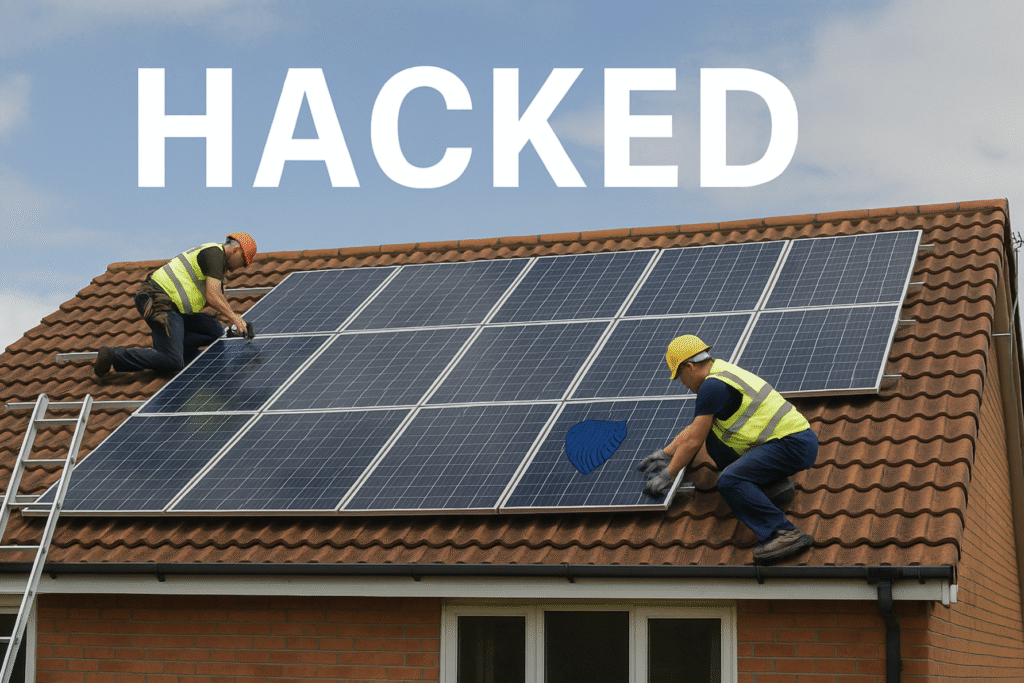
As the solar energy industry continues to grow, so do the cyber threats targeting it.
Solar companies today manage sensitive customer data, financial transactions, and even critical infrastructure like solar panel locations — making them prime targets for cybercriminals.
That’s why partnering with a specialized cybersecurity provider like Cyber57 is no longer optional — it’s essential.
Why I’m Sharing Our Experience with Cyber57
The reason I’m writing this article is simple:
We didn’t realize how vulnerable we were — until we became a target.
A few months ago, our solar company faced a serious cybersecurity incident.
Hackers launched a sophisticated email spoofing attack against us.
They created fake emails that looked like they were coming from our company, and started contacting our customers directly, trying to steal contracts, personal information, and even deposit payments.
At first, we didn’t even know it was happening. Customers were confused, asking why they were getting strange new invoices and “updated account details.” We quickly realized we were under attack.
That’s when Cyber57 stepped in
Their team immediately conducted a full forensic investigation of our systems.
They identified how the attackers were spoofing our email domains, closed the vulnerabilities, and implemented advanced email authentication protocols (like SPF, DKIM, and DMARC) to block fake emails from even reaching our clients.
In addition to email protection, Cyber57 also helped us:
- Warn and protect our clients from ongoing phishing attempts,
- Secure all our customer communication channels,
- Set up real-time monitoring to alert us instantly if future attacks are attempted,
- Rebuild customer trust by providing proof that their data was protected and steps were taken.
Without Cyber57’s expertise, the damage to our reputation, finances, and client base could have been devastating.
Thanks to them, we didn’t lose a single customer — and today, we’re stronger and more secure than ever.
How Cyber57 Secures Solar Companies
Cyber57 is a cybersecurity leader specializing in protecting small and mid-sized businesses, with deep expertise in industries like renewable energy.
Here’s how they help solar companies safeguard their operations:
- Customer Data Protection: Cyber57 encrypts and protects personal customer information, preventing identity theft and data breaches.
- Financial Security: Secure systems defend against fraud, ransomware attacks, and financial theft.
- Location and Infrastructure Security: Solar panel locations and grid infrastructure data are protected, eliminating the risk of physical sabotage or unauthorized system access.
- Email and Communication Security: Cyber57 ensures all communications with clients, contractors, and suppliers are safe from phishing and impersonation attacks.
- Real-Time Threat Monitoring: Their 24/7 monitoring systems detect and neutralize threats before they can cause damage.
By partnering with Cyber57, solar companies can ensure the safety of their clients, maintain trust, and avoid catastrophic financial and legal consequences.
What Could Happen If Solar Customer Data and Solar Panel Locations Get Leaked
If a solar company’s sensitive data is exposed, the consequences could be devastating:
1. Customer Trust Collapse
Once customers find out their personal data or financial information has been compromised, trust evaporates overnight. Losing client trust in a competitive industry like solar energy can lead to mass contract cancellations and permanent brand damage.
2. Financial Theft and Fraud
If hackers gain access to payment systems or client billing details, they can steal funds directly or trick clients into paying fraudulent invoices, costing companies hundreds of thousands of euros in losses.
3. Physical Infrastructure Attacks
Leakage of solar panel location data opens the door to physical sabotage or targeted attacks. Competitors or malicious actors could damage panels, disrupt energy production, or manipulate remote systems tied to the panels, leading to massive downtime and financial losses.
4. Regulatory Fines and Lawsuits
In Europe, a breach involving personal data can lead to severe GDPR fines — up to €20 million or 4% of annual global turnover, whichever is higher.
On top of fines, affected customers can also file lawsuits for negligence in protecting their data.
5. Increased Ransomware Attacks
Once a vulnerability is exploited, solar companies become repeat targets. Ransomware can freeze all operations, demanding hefty payments to regain access to internal systems and client files.
3 Most Common Email Spoofing and Phishing Tactics Against Solar Companies
When a solar company becomes a target, cybercriminals often use very specific strategies to exploit customer trust, disrupt operations, and steal money.
Here are the three most common methods:
1. Fake Invoices and Payment Redirection
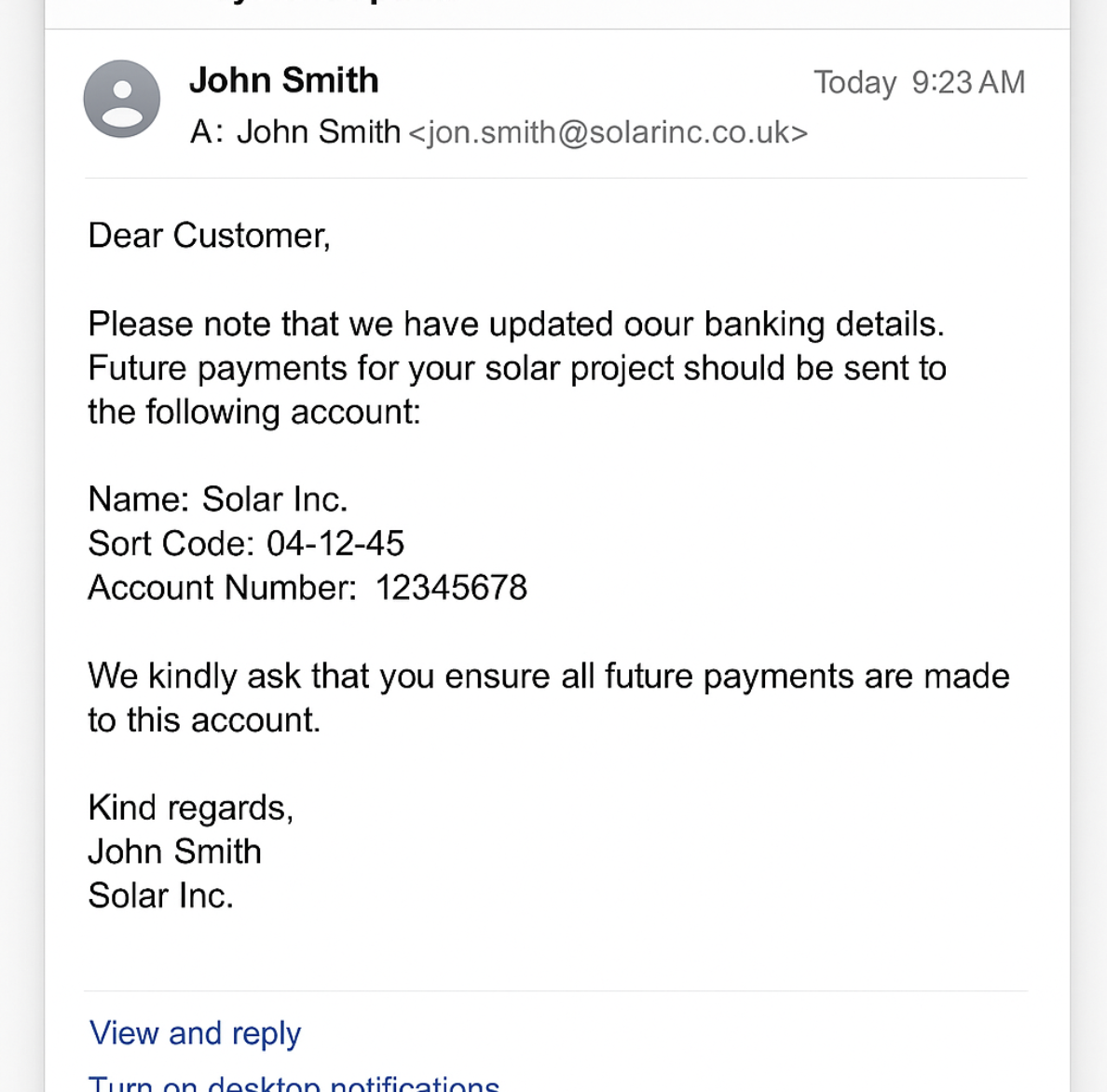
Hackers impersonate your company by sending fake invoices to your customers, asking them to transfer payments for installation, service, or maintenance work to a fraudulent bank account.
Because the emails look like they come from your official domain, many customers trust them — leading to direct financial losses and serious damage to your reputation.
Example:
A hacker emails your customer saying,
“Please note we have updated our banking details. Future payments for your solar project should be sent to the following account…” — but the account belongs to the attacker.
2. Fake Support Requests and Data Harvesting
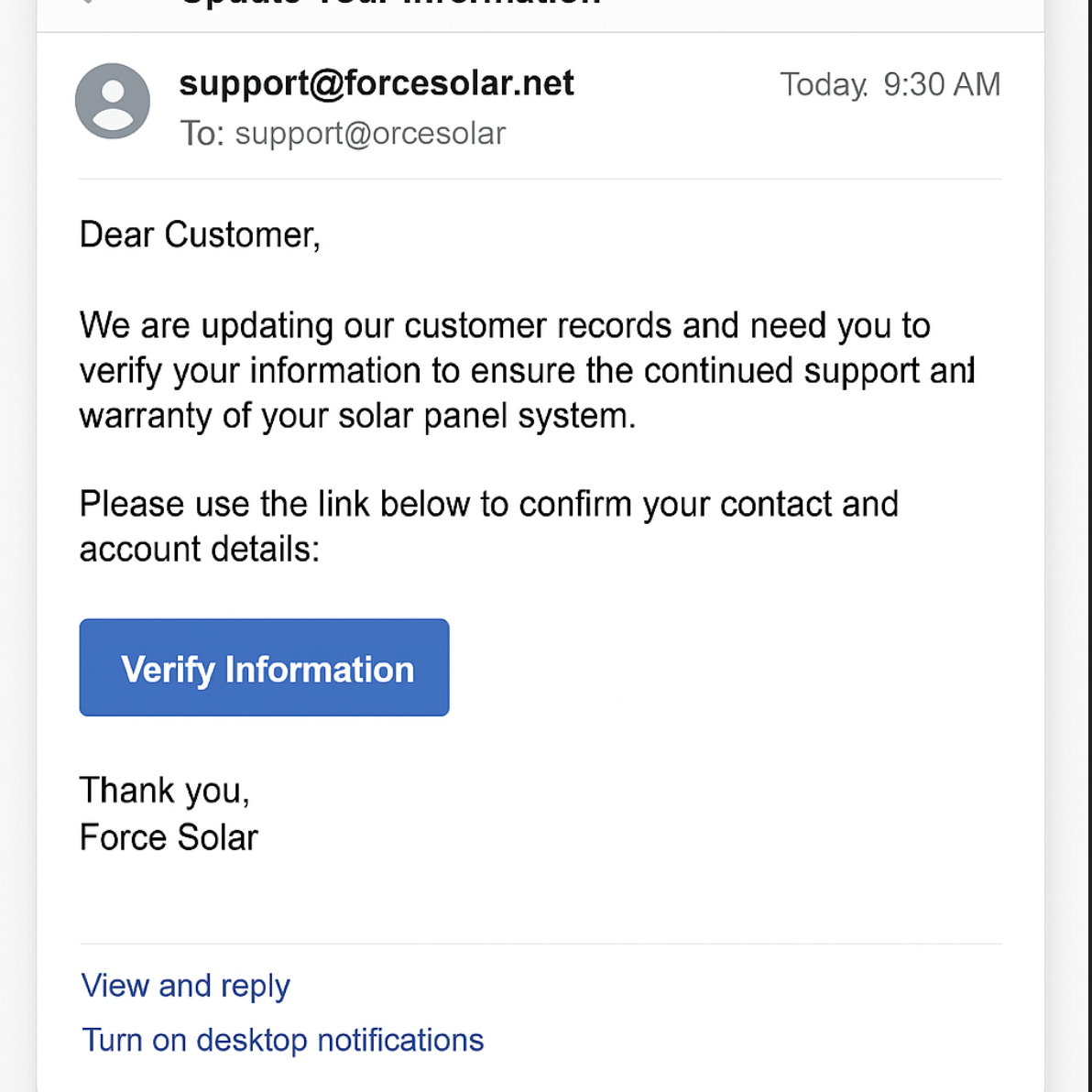
Attackers may send emails posing as your customer support team, requesting that customers “verify” or “update” their information — including personal data, payment details, or even login credentials.
This stolen information is then used for identity theft, fraud, or even resale on the dark web.
Example:
“Dear customer, we need to update your system’s warranty records. Please click this link and fill out your information to avoid service interruption.”
3. Phishing Emails Targeting Company Employees
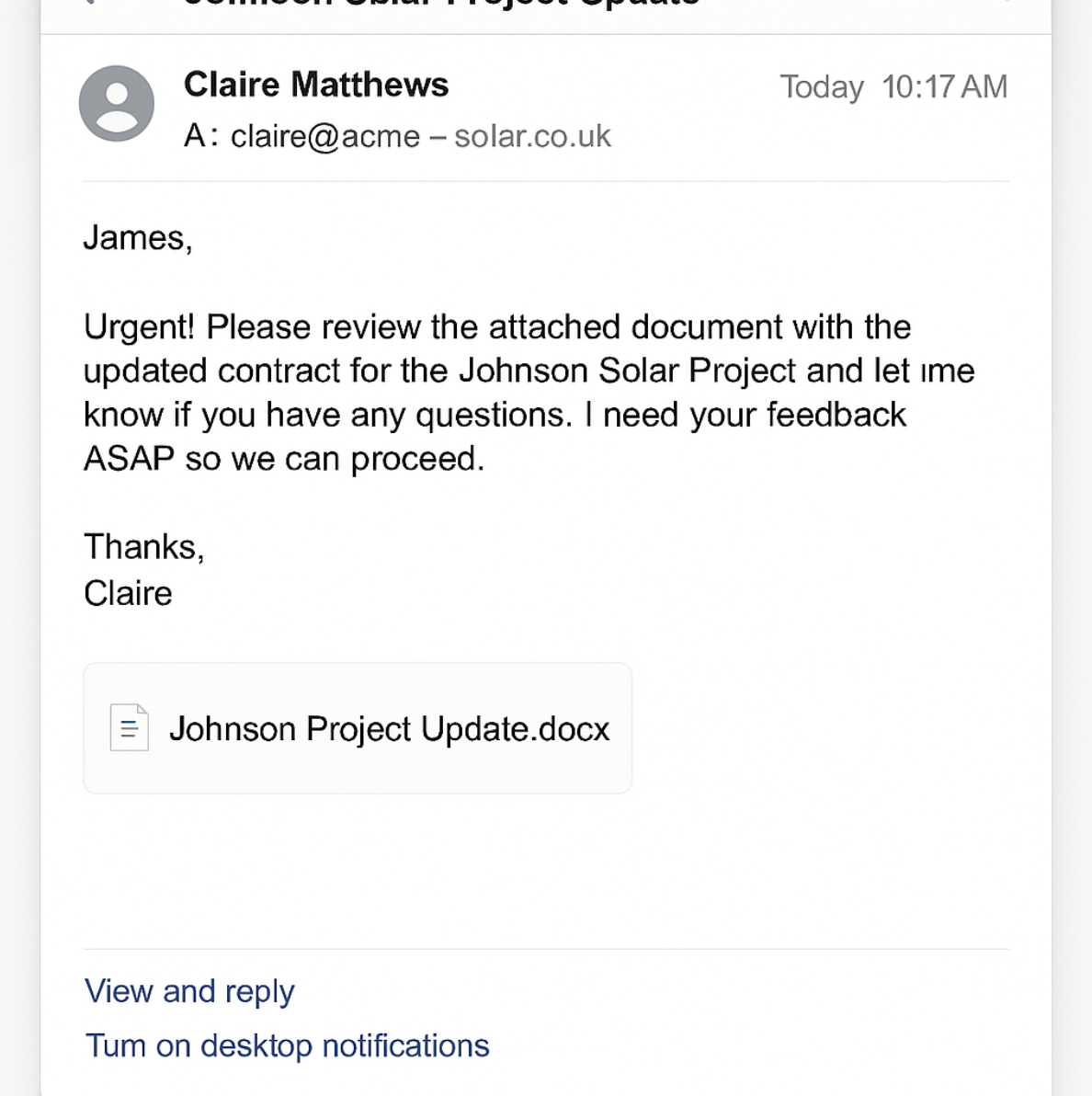
Not only customers — hackers also target your employees, especially those in accounting, customer service, or management.
A phishing email could trick a staff member into clicking a malicious link, downloading malware, or providing internal system credentials.
This can lead to full network compromise, ransomware attacks, or leakage of sensitive business and client information.
Example:
An email to your project manager pretending to be from the CEO, saying:
“Urgent! Please review this contract update for the Johnson Solar Project and respond immediately.” — with an infected document attached.
The solar energy industry is building the future — but it can’t afford to do so without robust cybersecurity protection.
Cyber57 provides the specialized tools and expertise needed to shield solar companies from the modern threat landscape, protect their customers, secure their finances, and defend their infrastructure.
If you operate in the solar space, Cyber57 isn’t just a cybersecurity provider — they’re your most important business partner.